

Interest in slow-aging tends to grow stronger among younger demographics
Trend Hunter | Slow-Aging: If You Can’t Avoid It, Slow It Down
Interest in slow-aging is particularly strong among those in their 20s and 30s—more so than middle-aged groups. Anxiety about early aging, combined with social media–driven content, is powering the spread of this trend.
Interest in slow-aging tends to grow stronger among younger demographics
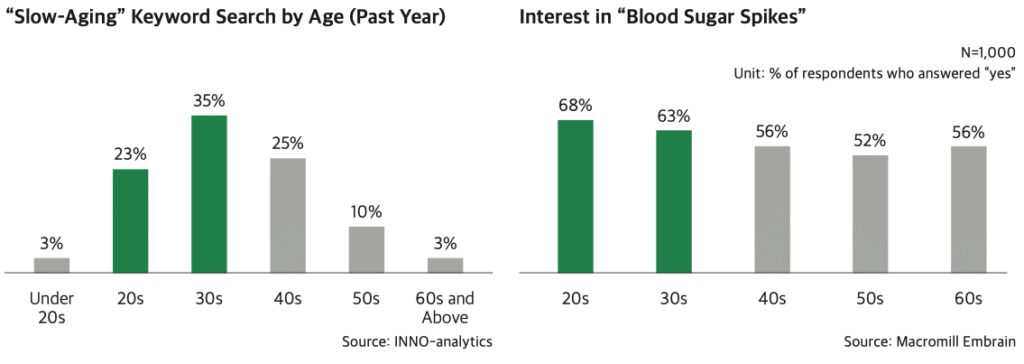
A notable aspect of the slow-aging trend is its stronger appeal among younger generations, even surpassing interest from those in their 40s and beyond. Naver search data reveals that people in their 20s and 30s account for nearly 58% of all searches for “slow aging”—a higher share than older age groups. Another key element is a growing interest in blood sugar spikes, now widely recognized as a key factor in aging. In a March 2025 survey on the awareness of blood sugar control and the slow-aging trend, more respondents in their 20s and 30s agreed that they have “become more interested in blood sugar spikes recently” compared to other age groups. Together, these insights demonstrate that slow-aging is not just a way for middle-aged and older adults to manage their health—it’s becoming a meaningful lifestyle focus for younger generations as well.
What’s Fueling Interest Among Younger Generations, and How They’re Engaging
‘Early Aging’ Anxiety Grips Younger Generations
Signs of aging and chronic illnesses—once seen as concerns for the middle-aged—are now emerging earlier, even among people in their 20s and 30s, a phenomenon referred to as “accelerated aging.” According to Korea’s Health Insurance Review and Assessment Service, the number of diabetes cases among those in their 20s and 30s jumped over 25% from 139,000 in 2018 to 174,000 in 2022, while hypertension cases rose by more than 20% from 213,000 to approximately 260,000 in the same period. Behind these numbers lies a pattern of lifestyle habits common among younger generations: heavy reliance on food delivery, preference for intensely flavored foods, excessive intake of simple sugars and refined carbohydrates, lack of exercise, sleep deprivation, and chronic stress. As more younger people experience or witness signs of early aging, they’re coming to a sobering realization that “without proactive health management now, the long-term consequences could be far greater.” This growing sense of urgency is fueling a rising interest in the slow-aging movement.
Slow-Aging Goes Viral Through Meme Culture
Despite a sense of urgency, younger generations are not taking this matter overly seriously. Instead, they are choosing to engage with the slow-aging movement in their own light-hearted and humorous manner.On platforms like YouTube, Instagram, and X (formerly Twitter), slow-aging is being reframed through witty memes. As such, managing health is becoming something more approachable and integrated into everyday routines. Notably, opposite terms like “rapid death” and “accelerated aging” are being used humorously in self-deprecating memes, fueling organic interest in slow-aging and helping it gain traction as a broader cultural trend.