Brands: Integrating Recovery into Daily Life
Marketing Trend | Active Recovery as a Daily Routine
Brands are transforming recovery into a measurable performance metric while embedding functional benefits into everyday products to create a seamless daily routine.
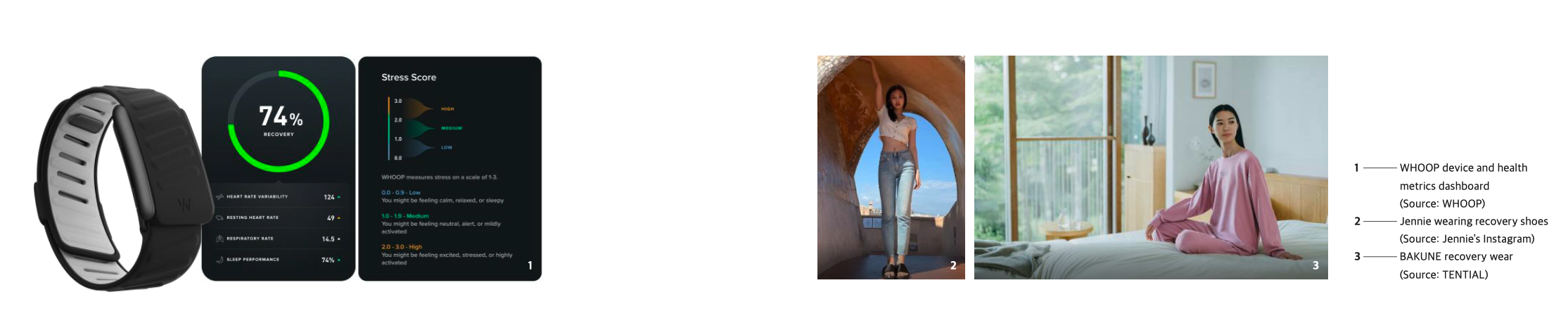
Brands are treating rest as more than a simple break. Instead, they are redefining it as a form of active self-care—something individuals can proactively measure and consume. Moving beyond simple restoration, brands are now using data-driven metrics to prove the tangible physical impact of recovery or embedding these functional benefits into everyday consumer products. WHOOP, a U.S. wearable tech company, converts physical recovery into actionable data. By tracking metrics such as sleep quality, heart rate variability (HRV), and resting heart rate, the platform enables users to monitor their daily physical readiness. Its Stress Monitor further helps users identify stress responses that are often overlooked in high-stimulation environments. Through a strategic partnership with Hyperice, a recovery equipment brand, users can even track how specific recovery tools impact their metrics via the app. This approach transforms the once-ambiguous concept of recovery into a “quantifiable health metric,” turning it into a self-care routine that allows users to actively monitor and calibrate their mental and physical states in real time. By framing recovery not as simple rest but as a self- care routine that sustains performance, WHOOP successfully appeals to Gen Z, who view recovery as a strategic investment in their future performance.
Active recovery is now becoming a consumer staple. In Korea, recovery footwear is experiencing rapid growth, redefining recovery from a brief post-workout ritual into a core pillar of daily self-care. New Balance, for instance, launched recovery slides and emphasizes its lifestyle benefits—such as plantar fasciitis relief, foot fatigue care, and comfortable fit—over purely athletic performance. This shift has successfully rebranded these products from specialized sports gear into “essential daily items” for managing one’s day-to-day physical condition. Similarly, the Japanese brand TENTIAL has seamlessly integrated recovery into daily life with its “BAKUNE” recovery wear. BAKUNE demonstrates that recovery is no longer a special event, but a tangible physical experience to be worn and felt every day. By allowing consumers to optimize their physical state simply by wearing apparel as comfortable as pajamas, the brand aligns perfectly with Gen Z’s proactive and self-directed approach to recovery.