Why GEO Matters
Issue Discovery | Beyond SEO: GEO
While AI search is booming, the advertising landscape within AI platforms remains unclear. Meanwhile, brands must figure out how to remain visible and reach consumers through AI—and this is exactly where
GEO can help.
Customer Touchpoints in the AI Era
In the offline era, brands connected with consumers through traditional media, such as television and newspapers. In the digital era, they reached consumers via search algorithms and paid placements on platforms. Now, in the AI era, brands must find ways to become visible through AI platforms. However, what sets AI platforms apart from past media channels and search engines is the uncertainty surrounding their advertising landscape. Ad products on these platforms are still in their infancy, both in terms of functionality and format. Additionally, users tend to react negatively when ads interrupt their experience on a platform. As AI evolves, it will not only filter brand messages more rigorously but also take on a greater role in the customer journey—searching, summarizing, and even making purchasing decisions on behalf of users. Whereas traditional media and search engines served as “gatekeepers” to information, AI is expected to evolve even beyond that role to become a personalized “AI agent.”
Adoption of Advertising Across Generative AI Platforms
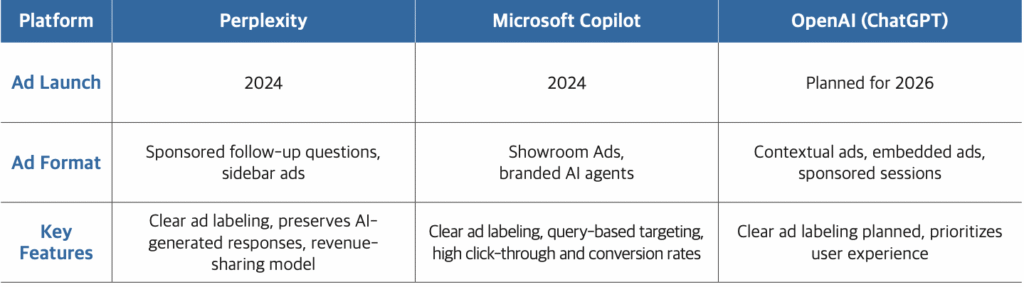
Adoption of Advertising Across Generative AI Platforms
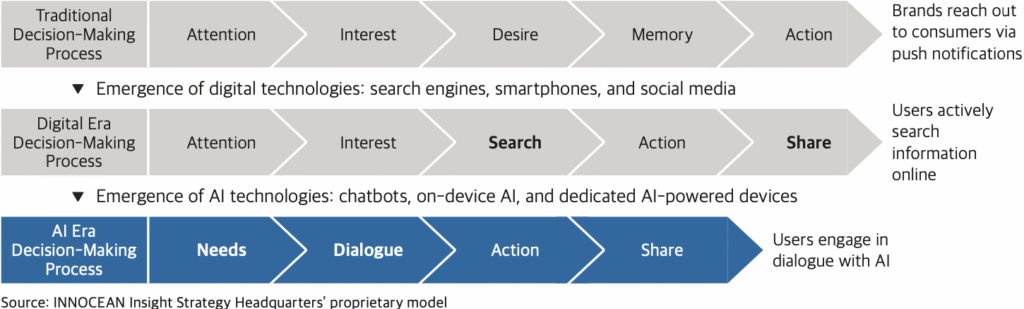
With the advancement of AI, we can begin to anticipate changes in how consumers make purchase decisions. With the rise of digital technology, the traditional decision-making model AIDMA evolved into AISAS, where information encountered through various media acted as a trigger for consumers to search online. These search activities expanded beyond simple portal sites to encompass a wide range of platforms, including YouTube, blogs, and Instagram. Now, with the rise of AI-powered search, this multi-channel search journey is increasingly being absorbed into generative AI (GAI) platforms. When a specific need arises, consumers engage in dialogue with AI to address their questions and curiosities—ultimately making purchase decisions based on these interactions. This purchasing journey is expected to extend further beyond GAI platforms as on-device AI advances, allowing consumers to interact with AI seamlessly through smartphones and home appliances.
The Evolution of the Consumer Decision Journey