Slow-aging is becoming a part of everyday life, embraced through practical health-focused routines like group challenges, making a lunchbox, and slow strength workouts.
Better Together Than Alone
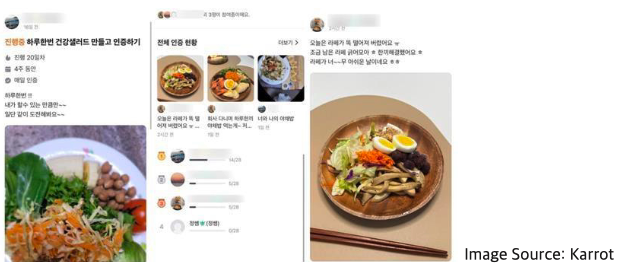
Healthy eating—once a difficult habit to maintain alone—is now becoming a shared lifestyle movement.Tens of thousands of users are actively participating in the slow-aging diet community, run by Dr. Jung, where they share photos of their meals, exchange simple recipes, and offer tips. The trend is also gaining momentum on the local community platform Karrot, where “salad meetups” have surged in popularity. Between August 2024 and February 2025, the number of salad meetup groups grew by 78% year-over-year, with user participation up by 128%. In these meetups, members log their salad intake, share salad spots, and participate in group challenges, such as a 4-week “Make and Log Salad a Day Challenge.”
Kickstarting Slow-Aging Journey with a Lunchbox
As slow-aging gains traction as a lifestyle trend, “slow-aging lunchboxes” are capturing the attention of younger consumers. The term recently ranked fifth among the most-searched keywords related to slow-aging, with individuals in their 20s and 30s accounting for 58.5% of the total search volume—underscoring particularly strong interest from this age group. For Gen Z in particular, lunchbox-making is evolving into more than just a way to manage their diet—it’s becoming a stylish hobby. From choosing ingredients and arranging meals with aesthetic flair to savoring a balanced bite, the entire process has become both a pastime and a daily wellness ritual.
Slow Workout
The rise of slow-aging is reshaping how people exercise. Instead of pushing for faster times with high-intensity runs, more individuals are embracing “slow jogging” and “Zone 2 running” as part of their slow-aging routines. Zone 2 running involves staying within the second of five intensity zones, which equals about 60 to 70 percent of your maximum heart rate. Thanks to its moderate intensity, it places less strain on the body, lowers the risk of injury, and reduces the psychological barrier to exercise. This makes it especially well-suited for consistent, long-term practice—positioning it as an ideal workout for those pursuing slow-aging. As running gains popularity as a national sport, it has undergone a shift in values—favoring sustainability over speed.