As slow-aging emerges as a lifestyle trend, it’s gaining attention for its practical approach to managing health—centered on diet, exercise, and better habits.
Growing Interest in Slow-Aging
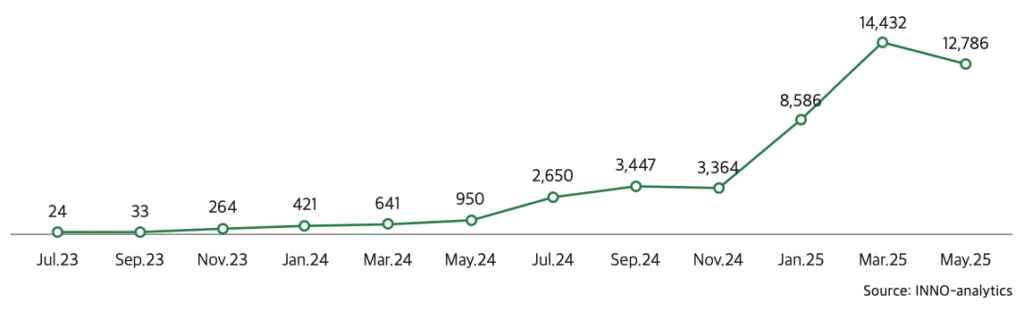
Mentions of the keyword “slow-aging”
Unit: Number of mentions
The rise of slow-aging as a cultural phenomenon can be traced back to July 2023, when Dr. Jung Heewon sparked widespread interest during his appearance on the popular TV show You Quiz on the Block. The momentum continued into 2024, when his book Slow-Aging Diet made the bestseller list, further cementing public curiosity. In 2025, the movement is proving to be more than just a fad—it’s evolving into a lifestyle trend, driven by a surge of user-generated content on platforms like YouTube and Instagram, where people actively share routines and tips for practicing slow aging.Such growing interest is evident in social data, with the keyword “slow-aging” surpassing 12,000 mentions as of May 2025.
Slow-aging vs. Anti-aging
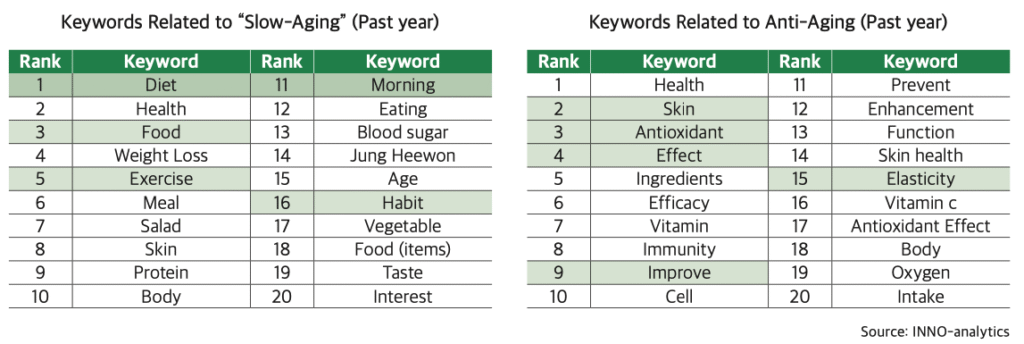
Top Relevant Keywords: Slow-Aging vs. Anti-Aging
Slow-aging is different from anti-aging. Anti-aging typically focuses on improving appearance, as reflected in its relevant keywords centered on beauty—“skin,” “antioxidant,” “effect,” and “improvement.” It tends to frame aging not as a natural process but as something to be fought or reversed. In contrast, slow-aging embraces aging as a natural process and focuses on slowing it down rather than fighting against it. It focuses on building healthy daily routines through everyday practices, as reflected in its relevant keywords, such as “diet,” “food,” “exercise,” “morning,” and “habit.” Rather than pursuing dramatic changes, slow-aging emphasizes long-term, sustainable habits, such as eating cleaner, exercising more, and breaking bad habits for improved health.