

The Multiplier Effect Model and Execution Strategies
Issue Discovery | The Multiplier Effect of Brand Advertising
It is critical to understand how the impact of brand advertising and performance advertising interact with one another to create synergies. The Multiplier Effect Model, which has recently emerged, can help understand that synergy effect (WARC, 2025).
The Multiplier Effect Model
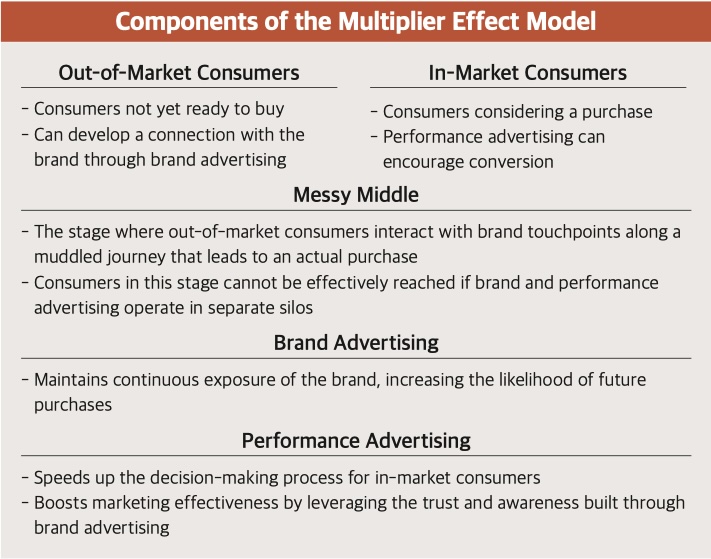
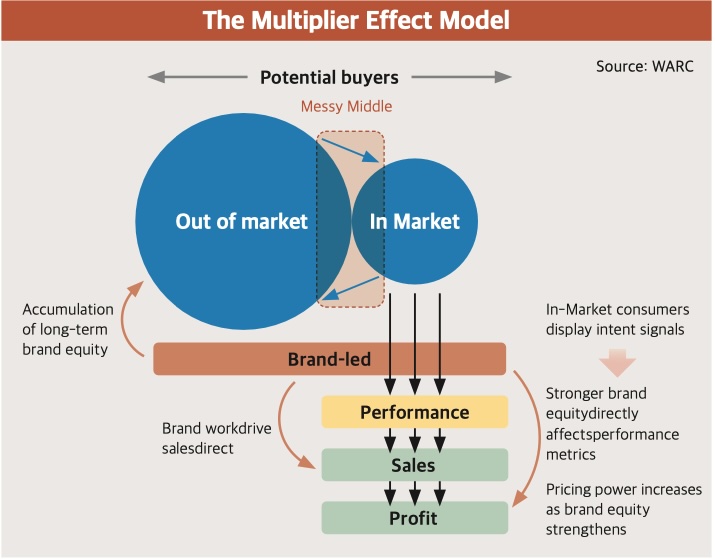
The Multiplier Effect Model illustrates how a “brand × performance” advertising strategy enhances overall marketing outcomes. The model highlights the “messy middle”—a stage in the consumer journey where brand-building and performance advertising intersect to influence purchasing decisions. Instead of a siloed approach, the model advocates for a synergistic, integrated strategy that fosters long-term growth.
Execution Strategy Utilizing the Multiplier Effect Model
To effectively implement a “brand × performance” strategy based on the Multiplier Effect Model, brands must carefully analyze and optimize budget allocation between brand-building and performance advertising.
Tracking Ad Performance and Continuous Optimization
Marketing Mix Modeling (MMM) can help brands refine and optimize ad performance with greater accuracy. MMM is particularly effective in identifying baseline* sales and isolating the direct impact of advertising. By continuously analyzing and optimizing performance, brands can better understand the synergistic effects of brand advertising and performance advertising and determine the most efficient budget allocation from a holistic perspective.
* Baseline Sales that would occur if no marketing activities or advertising took place.
Starting Point for Optimal Budget Allocation
Beyond analysis through MMM, research on past budget allocation strategies can serve as a starting point. A study by Analytic Partners suggests that the ideal budget ratio between brand and performance advertising is either 60:40 or 70:30. Even in cases where brands need to prioritize performance advertising, the study recommends allocating at least 30% of the total budget to brand-building activities to ensure long-term growth and stability.